
Two wheeler sales dropped in the past quarter as leading banks put two wheeler finance under high risk category.
Led by market leader Hero Honda, two-wheeler manufacturers posted an impressive growth in sales during the month of November on the back of favourable bank lending rates and a good response to new launches. Heavy promotional campaigns and sales offers by most companies also aided demand.

Rajesh Karkera and Hitesh Harisinghani spotted these beauties at the Auto Expo 2018

The firm, which showcased an electric variant of its Duet scooter at the 2016 Auto Expo, is working on two models at its Jaipur R&D centre.

The limited availability of flexible (flex)-fuel vehicles in the Indian market and the slow rollout of ethanol-blended petrol by oil-marketing companies (OMCs) remain major obstacles to achieving widespread use of biofuels in the transportation sector in India. Recently, two Union ministers have emphasised India's biofuel potential, arguing that it has the capacity and potential to lead a transition towards widespread biofuel adoption. Road Transport Minister Nitin Gadkari signalled that this transition is well underway and urged car manufacturers to quickly adapt and introduce new biofuel-run vehicles, lest the government resort to taxing diesel vehicles.
The ongoing credit squeeze in the sluggish two- and three-wheeler markets may affect the March sales targets of the three leading domestic players in the country. Taking the cue from a buoyant FY07 where the two-wheeler industry grew by a healthy 11.42 per cent, companies such as Hero Honda, TVS Motors and Bajaj Auto were hoping to surpass the FY07 target of 7.8 million units this year.

Which entrepreneur would willingly part with her or his hard-earned money for grasping, self-serving politicians? asks Debashis Basu.
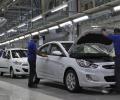
Leading carmakers Maruti Suzuki, Hyundai and Tata Motors reported robust dispatches to dealers in May on the back of strong demand for passenger vehicles across regions, even as the global semiconductor shortage continued to impact production. Mahindra & Mahindra, Kia India, Toyota Kirloskar Motor, Honda Cars and Skoda also witnessed strong demand for their models last month. The month of May also witnessed Tata Motors race ahead of Hyundai in terms of domestic wholesales.
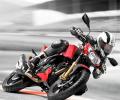
Known for their brisk performance, sweet handling and strong styling cues, TVS has now introduced the much awaited 200cc flagship. Tanmay Pangam takes it for a spin.

The country's largest carmaker Maruti Suzuki India (MSI) on Monday reported a 11.8 per cent increase in wholesales to 164,469 units in February. The company had sold 147,110 units in February last year, Maruti Suzuki India (MSI) said in a statement. Domestic sales increased 11.8 per cent to 1,52,983 units last month, as against 1,36,849 units in February 2020, it added.

The Apache manages to strike a great balance between outright performance and everyday usability. To top it off, the build quality is absolutely top-notch and the bike looks absolutely drop-dead gorgeous.
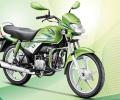
These are the best value for money bikes in terms of the money they save by using less fuel to run longer distances
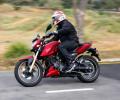
The Apache RTR 200 4V handles the flagship crown with aplomb!
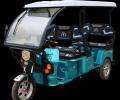
A series of flip-flop on policies and a non-existent charging infrastructure are the biggest challenge in achieving the target of selling 6-7 million hybrid and electric vehicles by 2020.

Reflecting the woes of the Indian automobile industry, the country's car exports remained flat at 550,466 units in 2013-14, during which domestic sales fell for the second consecutive year.

Industry leaders, including Mahindra Group chairman Anand Mahindra, RPG Enterprises chairman Harsh Goenka and Biocon Ltd chairperson Kiran Mazumdar-Shaw on Monday came out in support of the Agnipath scheme, saying it has large potential for employment of youth in the corporate sector. Mahindra also expressed dismay over the violence against the scheme while asserting that the farm equipment to aerospace conglomerate welcomes the opportunity to recruit trained, capable and young people under the programme. The Agnipath scheme, announced on June 14, provides for the recruitment of youths between the age bracket of 17-and-half years to 21 for only four years with a provision to retain 25 per cent of them for 15 more years.

The Softbank-backed company has set a price band of Rs 72 to Rs 76 per share for the maiden share sale and is expected to test the appetite for new-age loss-making companies.
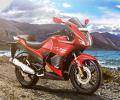
The two-wheeler industry marked its first fall in 11 months in November with sales of 1.24 million reporting a fall of nearly six per cent compared to the same month last year

The National Stock Exchange (NSE) Nifty Next 50 Index could undergo large-scale changes if the proposed tweaks to its computation methodology get implemented. In a discussion paper floated recently, NSE Indices, which owns and manages a portfolio of over 350 indices under the Nifty brand, proposed that only stocks that are traded in the futures and options (F&O) segment can be part of the index. Currently, as many as 11 non-F&O stocks are part of the Nifty Next 50 Index, which, as the name suggests, represents the next rung of large and liquid securities after the Nifty50.

The BSA Gold Star is launched....Ola Enters e-motorbikes Biz... Bajaj, TVS To Enter e2Ws Market...

Passenger vehicle wholesales in India rose by 14.16 per cent in August to 2,15,916 units, driven by pent-up demand, industry body SIAM said on Friday. According to the latest data by the Society of Indian Automobile Manufacturers, passenger vehicle wholesales stood at 1,89,129 units in the same month last year.
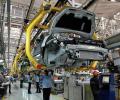
Automobile manufacturers are likely to report strong numbers for the September quarter of Financial Year 2023-24 (Q2 FY24), riding on growth across segments and offset by a marginal drop in overall two-wheeler (2W) volumes. Higher average selling price (ASP) year-on-year (YoY), which was necessitated by price hikes taken by original equipment manufacturers (OEMs), and an improved product mix will also aid revenues and margins. Moreover, commodity prices are down on a YoY basis, leading to higher margins in earnings before interest, taxes, depreciation and amortisation (Ebitda).

The country saw a massive year-on-year surge in the demand for electric vehicles, with retail sales of electric two-wheelers rising by 58 per cent, passenger vehicles by 130 per cent, three-wheelers by 82 per cent, and commercial vehicles by 171 per cent in March 2023, according to the data shared by the Federation of Automobile Dealers Associations (Fada). According to a report by JMK Research, the EV segment as a whole grew by 157 per cent during FY23, to 1,180,597 units, from 458,746 units a year ago. Overall, EV sales in March 2023 rose by 82 per cent from the March 2022 figure, the JMK report added.

Product launches to drive incremental volume growth for players such as Maruti Suzuki; medium and heavy commercial vehicle revival on track.

In a bid to strengthen their bilateral economic ties, India and Indonesia plan to explore opportunities for co-operation in oil and gas, and railway sectors, among other areas.
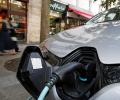
Automobile manufacturers, new and old, as well as ancillary suppliers are set to spend a combined Rs 70,630 crore over the next five years on either entering the electric vehicle segment or stepping up their presence in it. Data culled from announcements made by firms shows India, the world's fifth largest automobile market, is poised to receive one of the biggest capex pushes ever to fuel the transition from internal combustion engines to electric motors and batteries as part of a green drive. The EV push, egged on by the government's emphasis on electric mobility to meet its net zero targets, is expected to yield at least 25 electric vehicles - new ones as well as electrified versions of existing vehicles running on internal combustion engines.

With Housing Development Finance Corporation's (HDFC's) merger with HDFC Bank becoming effective on July 1, the merged entity is set to become the top weight in the benchmarks S&P BSE Sensex and the National Stock Exchange Nifty indices, dislodging the country's most valuable company, Reliance Industries (RIL), from its perch. HDFC will stop trading after July 13. At present, RIL has a weighting of close to 12 per cent in the Sensex and 10.3 per cent in the broad-based Nifty. Meanwhile, HDFC Bank and HDFC have weights of 9.9 per cent and 6.8 per cent in the Sensex and 8.8 per cent and 6 per cent in the Nifty, respectively.

With an m-cap of Rs 31,744 crore, IRCTC stood at 96th position in the overall market capitalisation ranking, the BSE data shows.

The Sensex closed the day at 28,141, up 486 points, while Nifty50 settled at 8,716, up 155 points.

The increase in PV sales in September was driven by festive season purchases, with SUV models like Maruti Suzuki's Brezza, Hyundai Creta, Mahindra Scorpio, Ford Ecosport and Honda W-RV witnessing good traction

Supply chain constraints will keep plaguing automobile companies even though demand significantly improved resulting in a 13 per cent year-on-year (YoY) increase in sales in financial year 2021-22 (FY22). Executives at auto firms fear that the Russia-Ukraine war will further dent the sector's prospects of recovery as supply chains face more disruptions. "The visibility in the supply side is so hazy that it is difficult to give even one quarter projection. But all the parameters of demand like pending bookings and enquiries are increasing.
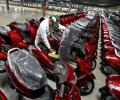
What has hit sentiment further is a draft proposal by the government to increase vehicle insurance premiums for financial year 2022-23 (FY23). Third-party motor insurance premiums have not been increased over the last two years and if this is approved, insurance costs for specific segments could rise by a fifth. The worst impacted is the 350cc and above two-wheeler segment, where premiums are up 21 per cent. Royal Enfield (Eicher Motor) is the market leader in the segment. The premiums in the 150-350cc two-wheeler category are also being inc

The two-wheeler segment is, however, still far from its H1FY19 peak of 9.7 million units

Check out some of the stocks that will react on the basis of their numbers in the near term.

RIL subsidiary Reliance New Energy Solar, Ola Electric, Hyundai Global Motors Company and Rajesh Exports have been approved for receiving incentives under the Rs 18,100 crore Production Linked Incentive (PLI) scheme for battery manufacturing in India, sources said on Thursday. "The ministry had received bids from 10 companies with a capacity of 130 GWh. Reliance, Ola Electric, Hyundai and Rajesh Exports have qualified for ACC batteries," a source said. Other companies which had applied for the PLI scheme for Advanced Chemistry Cell (ACC) batteries were Lucas-TVS, Mahindra & Mahindra, Amara Raja Batteries, Exide Industries, Larsen & Toubro and India Power Corporation Limited.
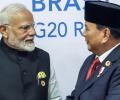
India is trying hard to erase Indonesia's wariness about New Delhi, building security cooperation in the Indian Ocean and Pacific Ocean. If Indonesia decides to buy the Brahmos missile, it would further strengthen relations between the world's most populous nation and the most populous Islamic country.
